Sep 22, 2026Private Label Cosmetics
What Is Private Label Cosmetics? A Complete Guide for Beauty Brands
Simple placement ideas for trays, pouches, and bags that reduce morning friction without adding visual clutter.
What Is Private Label Cosmetics? A Complete Guide for Beauty Brands
If you're planning to launch a skincare or beauty brand, you've probably come across the term private label cosmetics.
But what does private label actually mean? How is it different from OEM and ODM manufacturing? What should you consider when choosing products, packaging, formulas, MOQ, and a manufacturing partner?
This guide explains how private label cosmetics work and what you need to know before launching your beauty brand.
What Are Private Label Cosmetics?
Private label cosmetics are beauty products manufactured by a third-party cosmetic manufacturer and sold under your own brand name.
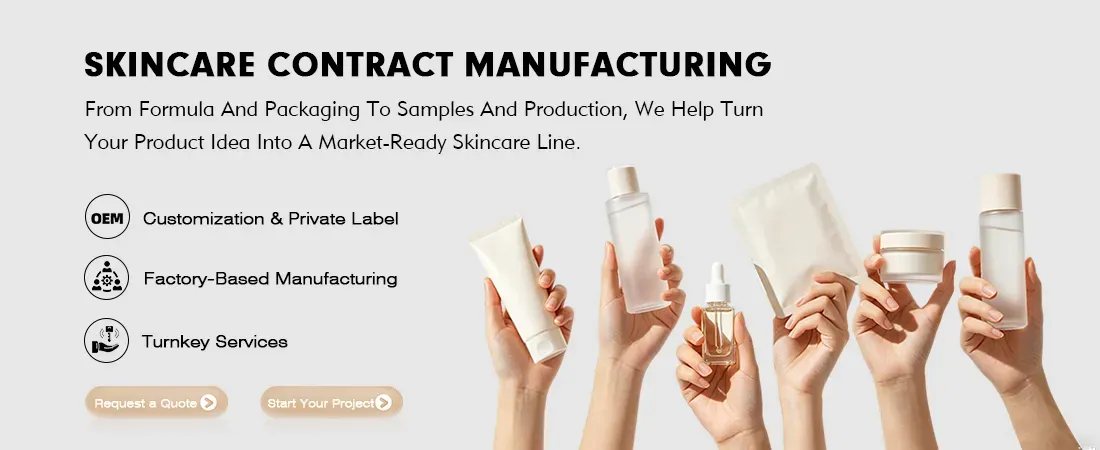
Instead of building your own factory and developing every product from scratch, you work with a cosmetic manufacturer that provides manufacturing, formulation, packaging, or product development services.
Depending on the manufacturer and project, you may be able to:
- Select from existing cosmetic formulas
- Customize a formula
- Choose product packaging
- Add your own branding and labels
- Select product colors, fragrances, or textures
- Develop a custom product
- Produce products under your own brand name
For example, a skincare brand may want to launch a facial serum. Instead of manufacturing the serum itself, the brand can work with a private label manufacturer to select or develop a formula, choose packaging, apply its branding, and have the finished product manufactured.
The result is a finished skincare product that customers see as the brand's own product.
How Does Private Label Cosmetics Work?
The private label process can vary from manufacturer to manufacturer, but a typical project follows these steps:
1. Choose Your Product
Start by deciding what type of product you want to launch.
Common private label categories include:
- Facial serums
- Moisturizers
- Cleansers
- Toners
- Face masks
- Body lotions
- Hair care products
- Lip care products
- Makeup products
Your product selection should be based on your target customer, brand positioning, price range, and overall product strategy.
2. Select or Develop a Formula
One of the biggest advantages of working with a cosmetic manufacturer is access to formulation and product development capabilities.
Depending on your project, you may choose an existing formula or request a customized formulation.
An existing formula can often help shorten the development process, while a custom formulation gives your brand more control over the product's ingredients, texture, fragrance, appearance, and performance requirements.
The right option depends on your budget, timeline, product concept, and level of customization.
3. Choose Your Packaging
Packaging is an important part of your brand identity.
You may need to select:
- Bottles
- Jars
- Tubes
- Pumps
- Droppers
- Caps
- Outer boxes
- Labels
Packaging should match your brand positioning and product requirements.
For example, a premium skincare brand may choose glass packaging and minimalist design, while a more accessible beauty brand may prioritize lightweight and cost-efficient packaging.
4. Review Samples
Before moving into full production, brands typically need to evaluate samples.
Depending on the product, you may review:
- Texture
- Color
- Fragrance
- Application
- Packaging
- Product appearance
- Overall user experience
Sampling is an important stage because it gives you an opportunity to identify changes before placing a production order.
5. Confirm the Production Details
Once the product and packaging are approved, the manufacturer can confirm the production specifications.
These may include:
- Formula
- Product quantity
- Packaging specifications
- Label artwork
- Packaging components
- Production requirements
- Quality spec
-